Tiji Festival 2026
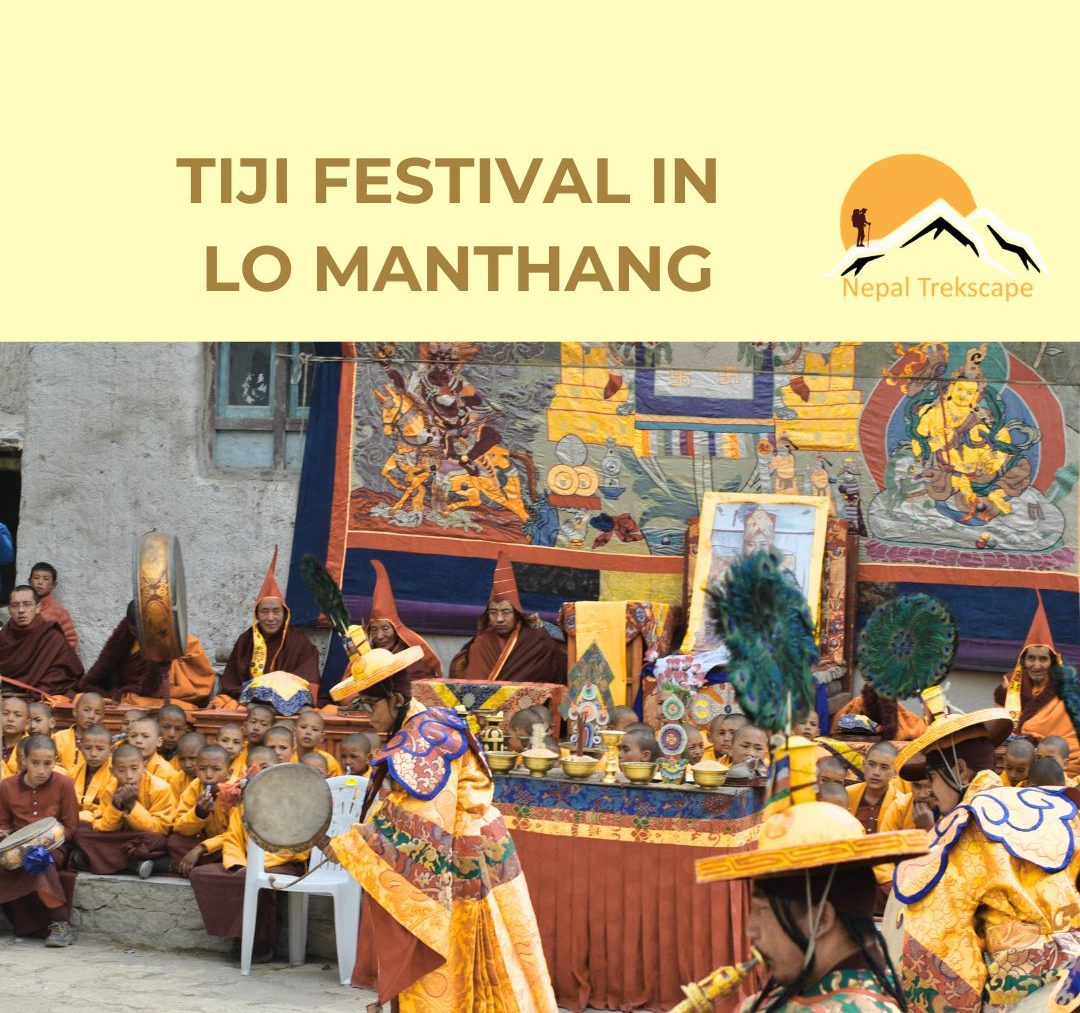
Tiji festival is the most sacred and religious festival celebrated annually in Lo Manthang. It is considered as one of the most important festival for the Tibetan Buddhism community. This festival is celebrated to commemorate the victory of Dorje Jono over his demon father. Monks from Chode Monastery performed sacred masked dance in the courtyard of the Royal Palace. For the visitor and trekkers, it offers great opportunity to get insight and experience this living tradition of Upper Mustang. It is believed that ritual performed during the festival brings endless blessing, peace and happiness for everyone.
Origin and Significance of Tiji Festival
The word Tiji comes from the Tibetan phrase “Ten Che” which imply “Prayer for the World Peace”. This depicts that the festival is not just celebrated for the communities of Mustang but also the sacred prayer for the restoration of peace for everyone.
The ancient story behind the celebration of Tiji Festival
Long ago, the existence of people living in Mustang region were threatened by powerful demon known as Mani Rimdu. The demon caused problem such as:
- Dry land and drought which led poor harvesting
- Health of domestic animals get worse
- Very little rain which was not enough for agriculture
- People suffered from starvation
These problems made the life of people very challenging as they were highly dependent on agriculture and animal husbandry.
The Buddhist saint Padma sambhara (Guru Rinpoche) manifested the spiritual protector (Vajrakila) to fight against the demon.
The Vajrakila (Dorje Jono) chased the demon and solve the problem faced by people. Victory over demon helped to preserve the existence of people.
This festival is celebrated each year to remind people that:
- Nature and human life are unseparable
- Negative energy can be destructed
- Peace comes with unity
- There is power in prayer and faith which brings peace and harmony
Religious significance of Tiji in Tibetan Buddhism
For the people following Tibetan Buddhism, Tiji is very important to purify negative energy and protect people from evil destruction. It is a sacred religious ceremony which involves prayers, chanting mantras and masked dance performed by monk to eliminate evil spirit. The religious significance of Tiji lies in bringing:
- Peace and harmony among people in the community
- Timely and enough rain for good harvesting of crops
- And protection from evil spirit
Cultural significance of Tiji for the indigenous people of Mustang Region
Annual celebration of Tiji, played a great role in strengthening the social bond. To celebrate this festival, people from remote villages such as Charang, Tsarang and Ghami arrive to Lo Manthang. The cultural significance of this festival lies in:
- To preserve the culture and tradition by handovering from one generation to another
- To boost the ethnic identity of Tibetan Buddhism influenced people
- Participation of both follower and non-follower of the religion.
Where and when Tiji Festival is celebrated?
Tiji festival is celebrated every year in the walled capital of Upper Mustang, Lo Manthang. It is not just destination to perform the rituals of this festival but is deeply rooted with the essence of it because:
- Being the heart of Mustang, Lo Manthang very old monasteries which served to Tibetan Buddhism
- For many centuries, entire Mustang Region was isolated from the outside world, Tiji has been preserved in its authentic form
In 2026, Tiji festival will be celebrated from 14th to 16th May based on Tibetan lunar calendar.
The Three Days of Tiji and their own significance
The Tiji festival is celebrated for three days and each day have its own significance.
Day 1 of Tiji Festival: The preparatory ritual
On the first day, monk from Chode Monastery arrive at the royal courtyard to perform masked dance and chant prayer. Additionally, sacred musical instrument such as long horn are blown and drums are played by monk. The dance depicts the birth of demon who brought the chaos and sufferings in the life of people of Mustang. This day remind people that courage and wisdom should be built to face the existing problem in our life.
Day 2 of Tiji Festival: Battle with evil
On the second day, monks perform Cham dance which depicts how Dorje Jono defeated powerful demon. This day remind people that problems and challenges in life can be overcome with courage and strong determination.
Day 3 of Tiji Festival: Victory and blessing
On the third day, monk perform the final Cham dance to eliminate the demon from ceremony. Additionally, they chant final prayer for the restoration of peace and happiness. This day make people to believe that peace and balance can be restored again.
How to experience Tiji Festival 2026 in Lo Manthang?
You can experience the Tiji Festival by visiting the Upper Mustang during the month of May in 2026. This month is considered as most favorable season to explore Upper Mustang because:
- Trails are dry and easier to walk
- Trekkers can see the panoramic view of Annapurna I, Dhaulagiri, Nilgiri and Tukuche Peak
- Weather is pleasant and temperature is mild during daytime
- There is good transporation and logistic facility
Join the Upper Mustang Trek package
Every year is not confirmed that this festival falls in the month of May. Sometimes it might fall on late April or early June based on Tibetan Lunar Calendar. After the confirmation of the date, you can pre-book the Upper Mustang Trek Package from Nepal Trekscape too. We will manage your permit, transportation and accommodation during trek. This trek is always led by the owner of Nepal Trekscape, Ajit Adhikari to ensure your journey is remarkable.
Trek with experienced and certified guide
Hiring the experienced and certified guide to trek Upper Mustang during Tiji Festival enhance your journey both culturally and adventurely.
Tiji Festival Etiquette for Trekkers and Visitors
Followings are the etiquette for trekkers and visitors during Tiji Festival celebration:
- Always avoid wearing revealing clothes during celebration
- Always ask to take photos inside the monasteries and during the prayers
- Always take off your shoes before you step inside the monasteries
- Never talk and laugh in a loud voice during prayer
- Respect the local culture and tradition
Accomodation during Tiji Festival
Accomodation is basic during Tiji Festival as trekkers and visitors book the room earlier to be the part of celebration. Moreover, family ran many lodges and teahouses. Rooms are very simple with twin beds and shared bathroom. You can also spend overnight in homestay where facilities are basic but you can experience culture more deeply. Additionally, local people serves you authentic home cooked food.