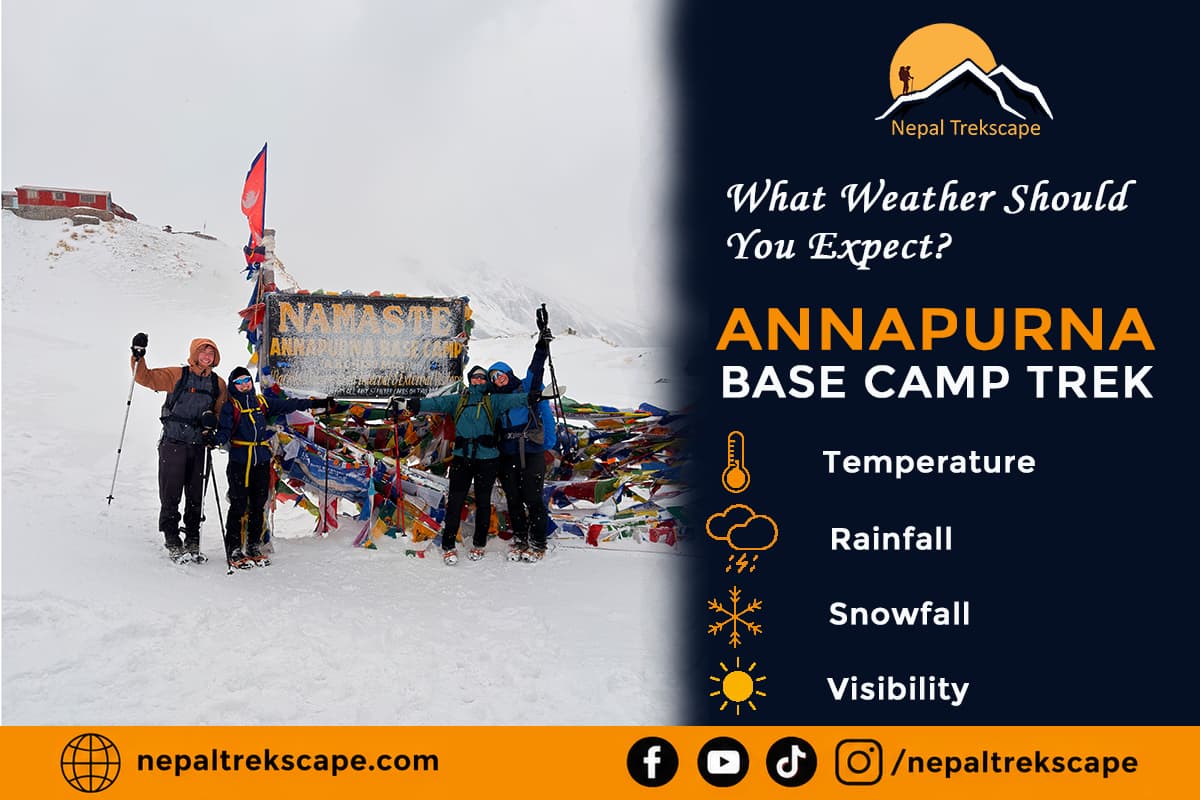
Preparing the Annapurna Base Camp Trek includes more than selecting the ideal season and itinerary based on your priority. In the recent years, mountain weather has changed frequently and has become very hard to predict due to climate change. Moreover, trekkers must understand the condition of weather in the Himalayas depending upon the elevation, month and different times of the day.
In the Annapurna Region, every month have variation in temperatures, trail condition, visibility, rainfall and snowfall pattern. However, knowing the typical weather pattern month-by-month helps trekker to set realistic expectation and prepare themselves accordingly. While weather condition may vary from day-to-day and this guide to Annapurna Base Camp Trek Weather gives usual weather insights by month.
Overview: Annapurna Base Camp Trek Weather
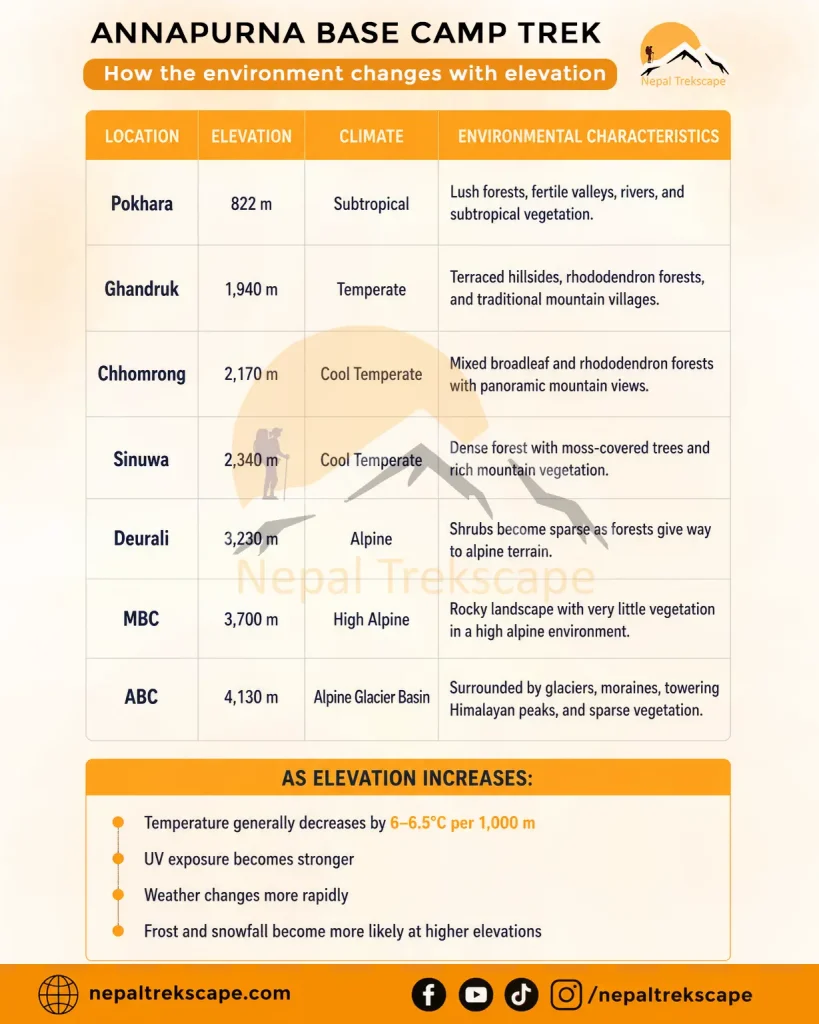
Annapurna Base Camp Trek traverses through diverse climate zones with the rise in elevation in a several days. Moreover, trek begins from the chosen trailhead consisting subtropical vegetation after driving from Pokhara, then, trekkers walk through alternating uphill and downhill trail. They pass through terraced fields, dense rhododendron forest, alpine landscape and finally reach to Annapurna Base Camp at 4130 meters. Additionally, with the gain in altitude, there is also significant change in temperature, visibility and precipitation.
Generally, drop in temperature is noticeable as trekkers ascent higher. Likewise, trail becomes more exposed to ultraviolet (UV) radiation and strong wind at higher elevation. Trekkers generally experience variation in weather condition between two villages despite being close together. However, anticipated weather condition for the Annapurna Region must be considered as the informative guide instead of an exact forecast.
Usually, trekkers may experience:
- Warm temperature while following the trail of lower elevation.
- Morning and evening time is generally cold above 2500 meters of altitude.
- Clearest view of snow-capped mountain at the time of early morning.
- Cloud cover increases in the afternoon which decrease visibility of Himalayas.
- Except the months of summer, nighttime temperature at Annapurna Base Camp Trek often drops below freezing point.
Therefore, this comprehensive guide of Annapurna Base Camp Trek weather is written from the real trekking experience of lead trekking guide Ajit Adhikari. He has more than fifteen years of trekking experience in the Annapurna Region.
Preparing for Annapurna Base Camp Trek and still confused when to trek? Read our Best Time for Annapurna Base Camp Trek guide which helps to choose the ideal season based on your priority and preference.
Why does weather change rapidly during ABC Trek?
Trekkers often experience frequent change in weather while walking through the trail Annapurna Base Camp route. Multiple natural factors leading to sudden change in weather conditions are:
Elevation
Elevation has greatest effect on the weather condition of different section of Annapurna Region. Generally, temperatures drop by approximately 6 to 6.5 degree celsius for every 1000 meters gain in elevation. Moreover, higher elevations lead to strong wind, intense sunlight, colder night and increase probability of frost and snowfall.
Mountain Microclimates
The Annapurna Region is surrounded by dense rhododendron and pine forest, deep valley, rivers, glaciers and snow-capped mountains. These natural features influence movement of air, formation of clouds, rain and snowfall time. Due to variation in the landscape from one section to another section, the weather also varies over few kilometers distance. Hence, these different weather conditions formed by these features in various places known as microclimates. For example, one village have rainfall while another village which is few kilometers away may have warm and sunny.
Weather Patterns by season
Nepal experiences four different seasons each year offering different weather pattern to the Annapurna Region.
Spring season leads to warm weather and trails are dry. Rhododendron forests bloom into white, pink and red color shades making it visually appealing.
Summer season is highly affected by the monsoon, causing regular rainfall and more humidity. Trails are slippery and muddy due to rain.
Autumn season offers clear visibility of mountain and trails are dry and well-maintained.
Winter season typically has colder temperature but the visibility is clear. There is frost and snowfall at higher elevations.
Different Times of the Day
Throughout the different part of the day, weather changes following predictable patterns.
Morning (6:00 AM – 10:00 AM)
During morning time, it is cold, sky is very clear and offers the panoramic views of snowcapped mountains. Hence, this period of time is the best for Himalayas photography.
Late Morning (10:00 AM – 1:00 PM)
Likewise, temperature rises gradually in the late morning. There is a formation of cloud cover around the surrounding snow-capped mountains.
Afternoon (1:00 PM – 4:00 PM)
During afternoon time, visibility decrease as formation of cloud cover often increases. Moreover, there is probability of light rainfall and snow showers for short period of time during spring and summer seasons.
Evening and Night
During evening and night time, temperature drops rapidly. Generally, there is the formation of frost during autumn and winter season. Except summer season, temperature of Annapurna Base Camp reaches to freezing point at nighttime.
According to lead trekking guide of Nepal Trekscape, Ajit Adhikari: “I highly recommend trekkers to begin their trek early in the morning. Commencement of the trek earlier helps trekkers to arrive their destination before afternoon with clear view of towering peaks and landscapes.”
Why this Annapurna Base Camp Trek Weather guide emphasizes on monthly pattern?
Month-by-month weather patterns gives essential information for trekkers who have already confirmed their adventure date. It is very helpful for them to pack right trekking gears and equipment. Hence, detailed weather analysis for each month covering temperature, probability of rainfall and snowfall, visibility and trail condition helps to set realistic expectation.
Annapurna Base Camp Trek Weather by Month
The following overview outlines the typical monthly weather pattern on the ABC Trek notifying earlier what trekkers will experience on the trail.
January
January is considered as the coldest month on the ABC Trek offering bright and sunny days. At higher elevation trails are covered with snow, especially around Machhapuchre Base Camp (MBC) and Annapurna Sanctuary and temperature drops below freezing point.
Key weather features of January
Average Temperature: On average, temperature ranges from -2 to 5 degrees Celsius at day and -15 to -10 degree Celsius at night.
Rainfall: There is very little rainfall.
Snowfall: At the higher elevation trekking settlement such as Deurali, MBC and ABC receives snowfall.
Visibility: Trekkers can see the clear views of surrounding snow-capped peaks after snowfall.
Trail condition: Trails at lower elevations (Nayapul, Ghandruk, Chhomrong) are usually dry and stable. Likewise, trails at middle elevations (Bamboo, Dovan, Himalaya) are also dry but they are slippery during morning time. Similarly, trails at higher elevations (Deurali, MBC and ABC) are mostly covered with snow and ice making trek more physically demanding. Moreover, trails are blocked often and becomes slippery due to fresh snowfall at higher section.
February
February stays cold, although the temperature of daytime starts to increase moderately by the end of the month.
Key weather features of February
Average Temperature: On average, temperature ranges from 0 to 6 degrees Celsius at day and -12 to -8 degree Celsius at night.
Rainfall: There is usually very low rainfall occurs.
Snowfall: Elevation above 3000 meters, still receives minimal snowfall.
Visibility: There is still excellent visibility of snow-covered mountains.
Trail condition: Trails at lower elevation are typically dry. Likewise, trails at middle elevation are also dry but some shaded area possibly icy or slippery mainly in the early morning. Similarly, trails at higher elevation still covered with snow.
March
March indicates the commencement of spring season. Snow begins to melt gradually and temperature becomes moderate. Additionally, rhododendron flowers start to bloom in the shades of white, pink and red.
Key weather features of March
Average Temperature: On average, temperature ranges from 4 to 8 degrees Celsius at day and -8 to -4 degree Celsius at night.
Rainfall: There are occasional rain showers especially by the end of the month
Snowfall: There is less possibility of snowfall at higher elevation.
Visibility: Generally, visibility is excellent offering the crystal-clear views of snow-capped mountains.
Trail condition: Trails at lower elevation are dry but becomes muddy after rain. Likewise, trails at middle elevation are also usually dry but some shaded sections are possibly damp and less muddy. Similarly, trails at higher elevation are well-maintained but patches of snow and ice may persist after latest snowfall.
April
April is regarded as one of the most favorable months offering stable weather, mild temperature and blooming rhododendron forest.
Key weather features of April
Average Temperature: On average, temperature ranges from 6 to 10 degrees Celsius at day and -4 to 0 degree Celsius at night.
Rainfall: There is generally very low rainfall.
Snowfall: There is very low possibility of snowfall at higher elevation.
Visibility: There is clear view of snow-covered mountains.
Trail condition: Trails at lower elevation are usually dry and well-maintained. Likewise, trails at middle elevation are usually dry but may become less muddy after afternoon rain showers. Similarly, trails at higher elevation are not covered with snow but scattered snow patches may persist in the shaded surface.
May
May is considered as the warmest month of spring season but the humidity tends to increase slowly during pre-monsoon period.
Key weather features of May
Average Temperature: On average, temperature ranges from 8 to 12 degrees Celsius at day and -2 to 3 degrees Celsius at night.
Rainfall: There is moderate rainfall but there are regular rain showers in the afternoon by the end of the month.
Snowfall: There is very low probability of snowfall at higher elevation but it is rare.
Visibility: There is clear view of snow-covered mountain in the morning time.
Trail condition: Trails at lower elevation are usually dry and well-maintained in early May. Likewise, trails at middle elevation are usually stable but may become muddy and slippery after afternoon rain. Similarly, trails at higher elevation are not covered with snow but scattered snow patches may persist in the shaded surface.
June
June is the commencement of summer monsoon and rainfall slowly increases particularly during afternoon and evening time.
Key weather features of June
Average Temperature: On average, temperature ranges from 10 to 14 degrees Celsius at day and 3 to 6 degrees Celsius at night.
Rainfall: There is usually high rainfall.
Snowfall: There is rare snowfall at the upper section.
Visibility: Views of snow-covered mountains are usually clear but there is the formation of cloud cover around surrounding peak by midday.
Trail condition: Trails at lower elevation are usually muddy and slippery due to heavy rainfall. Likewise, trails at middle elevation also become muddy and slippery due to rainfall. Similarly, trails at higher elevation also turned muddy and slippery and also visibility is reduced due to formation of clouds and fog at sky.
July
July is considered as the wettest month on the ABC Trek. Dense forests traverse to lush green landscape due to heavy rainfall. Moreover, Trek in this month become more challenging to wet, muddy and slippery trails
Key weather features of July
Average Temperature: On average, temperature ranges from 10 to 15 degrees Celsius at day and 4 to 7 degrees Celsius at night.
Rainfall: There is very heavy rainfall especially during afternoon and evening time.
Snowfall: There is very rare snowfall even at the higher elevation (Deurali, Maahhapuchre Base Camp, Annapurna Base Camp)
Visibility: There is clear view of snow-covered during early morning. Likewise, after early morning, cloud covers hide the surrounding peaks.
Trail condition: Trails at lower elevation are usually muddy and slippery due to heavy and continuous rainfall. Likewise, trails at middle elevation also become muddy and slippery due to rainfall which may cause small landslide. Similarly, trails at higher elevation also turned wet and slippery and also visibility is reduced due to formation of clouds, fog and regular rainfall.
August
August is the part of the monsoon season with regular rainfall and by the end of the month rainfall slowly decreases.
Key weather features of August
Average Temperature: On average, temperature ranges from 10 to 15 degrees Celsius at day and 4 to 7 degrees Celsius at night.
Rainfall: There is still very high rainfall.
Snowfall: There is very low possibility of snowfall.
Visibility: There is good visibility of mountains in the early morning.
Trail condition: Trails at lower elevation are wet, muddy and slippery due to high rainfall and leeches are common in dense forest. Likewise, trails at middle elevation also become muddy and slippery due to rainfall which may cause small landslide. Similarly, trails at higher elevation also stay wet and slippery.
September
Monsoon lasts till early September which is not ideal for trekking. Likewise, mid-September usually marks the beginning of autumn.
Key weather features of September
Average Temperature: On average, temperature ranges from 9 to 13 degrees Celsius at day and 2 to 5 degrees Celsius at night.
Rainfall: There is moderate rainfall and decreases gradually after early-September.
Snowfall: Probability of snowfall is minimal.
Visibility: There is excellent visibility of towering peaks.
Trail condition: By late September, trails of lower, middle and higher section dry out offering favorable and comfortable trekking.
October
October is regarded as the best month for trekking due to stable weather and breathtaking view of diverse landscape.
Key weather features of October
Average Temperature: On average, temperature ranges from 7 to 12 degrees Celsius at day and -2 to 2 degrees Celsius at night.
Rainfall: There is very low rainfall.
Snowfall: There is very rare chance of snowfall.
Visibility: Trekkers are offered with clear view of surrounding snow-covered peaks.
Trail condition: Trails are typically dry offering comfortable trekking condition.
November
November is the part of the October season and temperature drops significantly at night.
Key weather features of November
Average Temperature: On average, temperature ranges from 5 to 10 degrees Celsius at day and -5 to -2 degrees Celsius at night.
Rainfall: There is very low rainfall.
Snowfall: Area near Annapurna Base Camp receives moderate snowfall by the end of the month.
Visibility: There is usually excellent visibility of snow-covered mountains.
Trail condition: Trails at lower and middle elevation are dry and well-maintained offering comfortable trekking situation. Similarly, trails at higher elevation also stay clear and dry but snow or icy patches may become visible at the end of the month after recent snowfall.
December
December signifies the arrival of winter in the Annapurna Region.
Key weather features of December
Average Temperature: On average, temperature ranges from 2 to 7 degrees Celsius at day and -10 to -6 degrees Celsius at night.
Rainfall: There is very less rainfall.
Snowfall: There is high snowfall above 3200 meters altitude.
Visibility: There is excellent view of mountains on a clear day.
Trail condition: Trails are dry and stable at lower and middle elevation. Likewise, trails at higher elevation are partly covered with snow and ice after recent snowfall making trek challenging.