Nepal offers the most beautiful trekking destinations in the world. There are many popular trekking destinations in Nepal which offers stunning views of snowcapped mountains. Additionally, trekkers can get insights about culture, tradition and lifestyle of indigenous people of particular trekking destination. Also, trekkers can experience the remote Himalayan wilderness.
Most popular trekking destination of Nepal are Everest Region, Annapurna Region, Langtang Valley, Manaslu Region and Mustang. There is no road in the higher elevation of this above-mentioned trekking destination.
In the Everest Region, there is no road constructed in the main trekking areas like Namche Bazaar, Tengboche and other high-altitude areas. Tenzing-Hillary Airport is the main supply entry point in the Everest Region. From here, pack animals are used as means of transportation to supply fuels (gas cylinders), food and required construction materials.
Similarly, in the Annapurna Region, vehicles can transport fuels, food and other required goods in the Jhinu Danda. From here also, pack animals like donkeys are used as means of transportation in the high-altitude areas.
Likewise, in the Manaslu Region, food, fuel, and supplies are transported by vehicles in the lower villages like Soti Khola, Machha Khola, and Jagat. There is no vehicle access to high altitude village Samagaon. So, mules, yaks or porters are used to deliver essential supplies to the high-altitude village of this region.
In the same way, in the Mustang Region essential supplies are transported by vehicle in the Jomsom area only. Pack animals like mules, yaks and donkeys are used to transport food, fuels, etc to remote village like Upper Mustang.
If we talk about Langtang Valley, Syabrubesi is the key supply entry point. Beyond this, pack animals like mules, yaks and dzopkyo are used to deliver the food, fuels and other essential goods to the high-altitude areas.
No alternative trails for pack animals
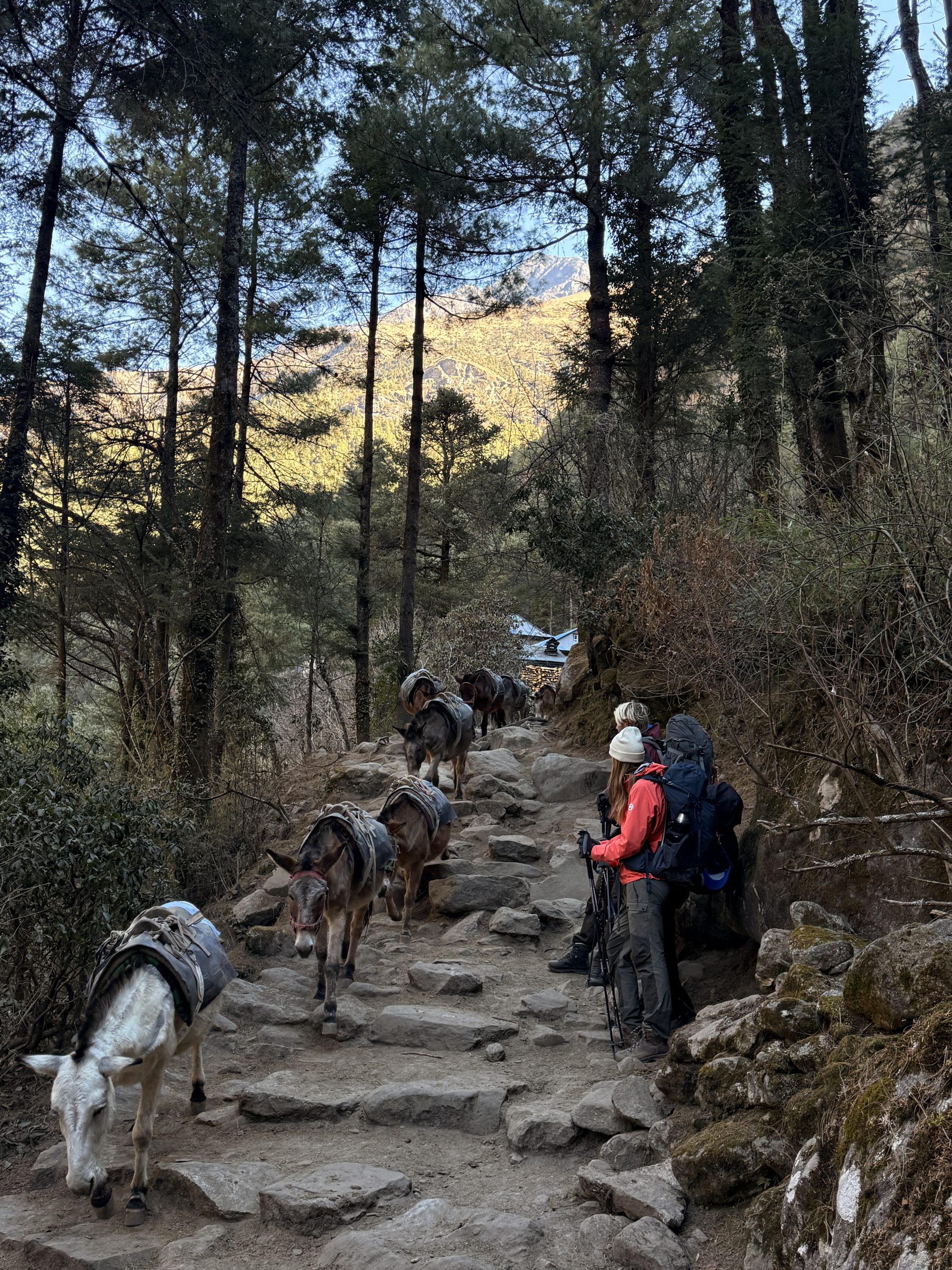
There are no alternative trails constructed for the pack animals like yaks, mules, donkeys in the trekking region of Nepal. Trekking trails are shared by pack animals, local people and the trekkers. These trails are used as the main route of transportation to supply fuel, food, construction materials to the high-altitude villages.
Due to the lack of road, pack animals have become the backbone of Himalayas logistics in the most popular trekking region of Nepal. There is high chance of accident in the trekking trails if trekkers do not know where to stand when pack animals are passing on narrow and steep trails.
Why pack animals are used in the trekking trails?
In most of the trekking destination of Nepal, trails are steep, narrow and rugged where vehicles are not accessible. Pack animals like donkey, mules, yak can walk on the steep, narrow and rugged trails easily. So, these animals are used as the main source of transportation to supply fuels, food, etc to the high-altitude settlements.
Why Pack Animals Can Be Dangerous If You’re Careless
Pack animals are generally calm, but they are still animals. When carrying heavy loads:
- Their balance changes
- Their vision becomes limited
- They may react suddenly to noise or movement
On wide roads, this wouldn’t matter much. But on a narrow mountain trail with a steep drop on one side, one wrong movement can become dangerous.
The Golden Rule of Trekking Around Animals
Trekkers must always stand on the mountain (inner) side of the trail.
Never on the valley or cliff edge.
This rule exists for several reasons:
- Animals may kick sideways without warning
- Loads may swing slightly while walking
- Animals cannot easily stop once moving
- Trekkers need solid ground behind them
Standing on the mountain side gives you something to lean toward if needed. Standing on the valley side gives you nothing but air.
Understanding Animal Behavior on the Trail
Pack animals are trained to follow a rhythm:
- They walk in a line
- They follow the handler’s commands
- They do not like sudden obstacles
Sudden movements, loud voices, or swinging trekking poles can disturb this rhythm. When animals lose rhythm, accidents happen.
That’s why calm behavior is essential.
Step-by-Step: How to Pass Pack animals Safely
When you hear bells or handlers calling out, follow these steps:
- Stop walking immediately
Do not try to squeeze past. - Move toward the mountain wall
This is your safest position. - Stand still and face the trail
Avoid turning your back suddenly. - Hold trekking poles close to your body
Never extend them outward. - Remain calm and quiet
Let the animals pass naturally.
Once the last animal passes, wait a few seconds before continuing.
Why You Should Never Walk Between Animals
Pack animals move as a group. Walking between them can:
- Confuse the animals
- Disrupt their pace
- Increase risk of kicking or slipping
Always wait until the entire group has passed.
Respecting Animal Handlers and Local Culture
Animal handlers are experienced mountain workers. They understand their animals better than anyone.
As trekkers:
- Follow their instructions immediately
- Never shout or argue
- Give animals priority
Respect on the trail builds trust between trekkers and local communities.
Why We Teach This Rule at Nepal Trekscape
At Nepal Trekscape, our responsibility goes beyond showing you beautiful landscapes. Our role is to:
- Educate
- Protect
- Guide responsibly
That’s why we brief every trekker on animal safety before the trek begins.
Frequently Asked Questions (FAQ)
1. What should trekkers do when donkeys or mules approach on a narrow trekking trail in Nepal?
When donkeys or mules approach on a trekking trail, trekkers should immediately stop walking and move to the mountain side (inner side) of the trail. Stand still and allow the animals to pass calmly. Avoid sudden movements, loud noises, or swinging trekking poles, as these actions may disturb the animals.
2. Why must trekkers stand on the mountain side when animals pass?
Trekkers must stand on the mountain side because animals often carry heavy loads that may swing outward. Standing on the valley or cliff edge increases the risk of losing balance or being pushed toward the drop. The mountain side provides a safer and more stable position.
3. Are donkeys and pack animals dangerous for trekkers?
Donkeys and other pack animals are generally calm and well-trained, but they can still be unpredictable when carrying heavy loads. Sudden movements, loud sounds, or narrow trails can make them react unexpectedly. That is why trekkers should always stay alert and follow proper trail etiquette.
4. Why are donkeys commonly used on trekking trails in Nepal?
In many Himalayan trekking regions, roads do not exist. Donkeys, mules, horses, and yaks transport essential supplies such as food, construction materials, fuel, and trekking equipment between villages. These animals play a vital role in supporting local communities and the trekking industry.
5. Is it safe to take photos when animals pass on trekking trails?
It is not recommended to take photos while animals are passing on narrow trails. Stopping to take pictures can distract you and cause sudden movements that may disturb the animals. It is always safer to wait until the animals have passed before taking photos.