Understanding the Annapurna Base Camp Trek Elevation is very important while planning this legendary high-altitude Himalayan adventure. Moreover, arriving the Annapurna Base Camp (ABC) is the most unforgettable trekking achievement not only due to breathtaking diverse landscape but also due to gradual climb across multiple elevation zone. Trekking journey start through the trail following lush green foothills close to Pokhara and steady climb to foot of the Annapurna I. However, this moderately challenging adventure lead you through diverse ecological zone providing view of distinct landscape and remarkable trekking experience.
While many guides emphasize on trekking route or itineraries, this article interpret ABC Trek from the perspective of elevation. Our guide gives complete information about elevation profile, village and trekking settlement heights, cumulative elevation gains and altitude statistics. Furthermore, you will get insight about how the different altitude level affect:
- pace of walking
- energy level
- trekking experience
- temperature of surrounding
- type of vegetation
Knowing the variation of elevation throughout the trek and their effects helps you to:
- prepare yourself mentally and physically to overcome the challenges
- pack the essential gears
- allocate time for proper acclimatization to minimize the altitude related issues
Are you a first-time trekker who is planning high-altitude Himalayan adventure or comparing the elevation of famous trekking route of Nepal? This guide will definitely help you to learn about how change in elevation shapes the Annapurna Base Camp Trek.
Overview of Annapurna Base Camp Trek Elevation
ABC Trek is the most accessible high-altitude trekking destination offering gradual elevation profiles in comparison to other Nepal’s classic Himalayan treks. Unlike trekking routes that reaches above 5000 meters but it is still challenging to reach maximum elevation of 4130 meters due to reduced oxygen level. With proper preparation and planning it is achievable for many trekkers.
The ABC Trek starts at different elevation based on the trailhead and itinerary you select. Almost all itineraries of this trek commence after driving from Kathmandu to Pokhara before arriving to trailhead between 1000 and 2000 meters. Likewise, trek ends with route descend back to approximately similar elevation where it started before returning to Pokhara.
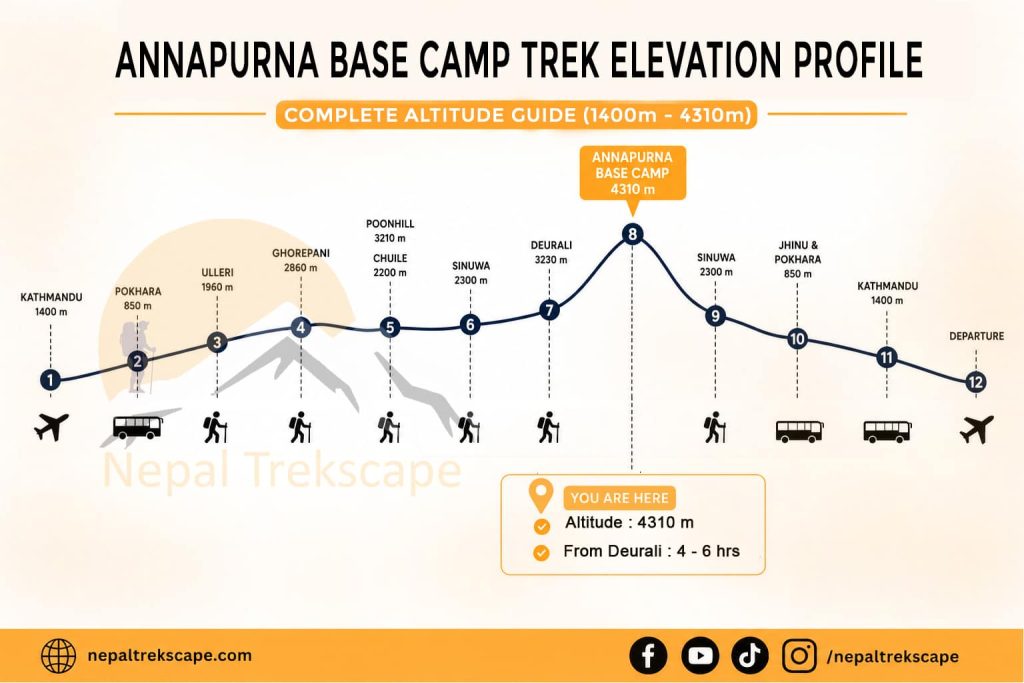
Annapurna Base Camp Trek Elevation Profile
One of the notable features of Annapurna Base Camp Trek is that it follows a gradual elevation profile. Hence, trail gradually gains elevation each day instead of gaining significant altitude in short period of time. This steady increase in elevation provides our body time to adjust the environment of changing altitude, minimizing the risk of altitude sickness.
Altitude gradually rises as you continue your trek passing through several village and trekking settlements such as Chhomrong, Bamboo and Deurali. Likewise, your body is well acclimatized to adjust the thinner air when you arrive to Machhapuchre Base Camp (MBC). Hence, final trek from MBC to Annapurna Base Camp (ABC) involves gentle climb leading to you an maximum elevation of 4130 meters.
How change in elevation shapes the trekking experiences
The Annapurna Base Camp Trek altitude significantly affects much more than the number shown on a map. As there is rise in altitude, trekkers notice gradual changes in:
- Breathing
- temperature
- physical performance
- vegetation
- weather condition
- mountain view
- overall energy level of body
Knowing these changes before your trek starts helps you to:
- set realistic expectation
- manage your pace
- have a safer trek
- Enhance your trekking experience
Trekking Pace
At lower elevation, most trekkers walk at a consistent pace without taking regular breaks. Likewise, above 3000 meters elevation, they naturally slow their pace due thin air. Moreover, slow pace of walking helps to walk uphill and conserve the energy whole day.
Oxygen Availability
With the rise in elevation, the amount of oxygen present in the air gradually declines making uphill walk more demanding. Although the proportion of oxygen in the atmosphere remain constant but each breath contains less oxygen due to lower air pressure.
Generally, reduction in the air pressure happens gradually with the rise in altitude. But most of the trekkers realize the difference after reaching above 3000 meters. They might feel difficulty in breathing during steep uphill climb, especially near Machhapuchre Base Camp and Annapurna Base Camp.
Temperature Variations
Change in elevation leads to variation in the temperature. Generally, lower elevation near Pokhara experiences mild to warm temperature during most of the year. Similarly, the high-altitude environment around Annapurna Base Camp is significantly colder.
On average, temperature drop by approximately 6 to 6.5 degree Celsius for every 1000 meters rise in elevation. While the actual temperature varies with weather condition and seasonal change.
Throughout the journey, trekkers often experience:
- Warm daytime temperature at lower section of the trek
- Moderately cool mornings and evenings through the middle section
- Freezing temperature and occasional snowfall especially during winter season near Annapurna Base Camp
According to Lead Guide of Nepal Trekscape, Ajit Adhikari “Wearing clothing in layers provides flexibility to adjust to changing temperature and weather condition at different elevation “.
Vegetation Types
One of the most gratifying aspects of the Annapurna Base Camp Trek is witnessing how the landscape changes with the gain in altitude.
Along the way, you will move through:
- Subtropical forest with terraced farmland and traditional Gurung Villages
- Temperate forest covered with oak, bamboo and rhododendron trees
- Subalpine terrain characterized by fewer trees
- Alpine terrain near Annapurna Base Camp surrounded by snow-capped mountains and characterized by rocky slope and glaciers.
Mountain Scenery
Rise in altitude allows the trekkers to see the clear view of mountain. Generally, at lower altitude which is covered by forests and hills limits the close-up view of mountain while offering rare glimpse of distant peak. However, highest elevation of trek offers uninterrupted views of Annapurna I, Annapurna South, Hiunchuli, Gangapurna, Fishtail and multiple surrounding peaks.
Recovery and Energy Restoration
Higher altitude demands more physical effort, although trekking at a slow pace.
Many trekkers have experienced that:
- Steep uphill climb feels more strenuous.
- Longer rest break helps in recovery and energy restoration after climbing to higher altitude.
- Staying hydrated and eating nutritious meals and keeping consistent pace leads to recovery.
According to Senior Female Trekking Guide, Bunu Tamang: “At higher elevation, always listen to your body, keep a steady pace, stay hydrated, have balanced diet and take frequent breaks to restore energy.”
Frequently asked questions:
At what elevation Annapurna Base Camp located?
Annapurna Base Camp is nestled at 4130 meters (13,550 feet) above sea level inside the Annapurna Sanctuary.
What is the highest altitude on the ABC trek?
The maximum altitude reached during ABC trek is Annapurna Base Camp (4130 m).
Where is the highest overnight stay on the ABC trek?
Annapurna Base Camp at an altitude of 4130 m considered as the highest overnight stay. Moreover, it offers trekkers to witness the stunning sunrise and sunset view over the Annapurna Massif along with the surrounding snow-capped peaks.
Which trekking settlement has the highest elevation before arriving the Annapurna Base Camp?
Machhapuchre Base Camp (3700 m) is the highest elevation and serving as highest overnight stiop before reaching Annapurna Base Camp.
Does the elevation increase each day while trekking?
Not always, the trail of ABC includes both ascent and descent which tends to increase the cumulative elevation gain in comparison to net elevation difference. Hence, there is no increment of elevation continuously throughout the trek.
Which section of the ABC Trek involves largest elevation gain?
The most elevation gain on the trek vary depending upon the how many days itinerary you choose. If you select the 12-day ABC Trek itinerary including Poon Hill then initial ascent heading to Ulleri and final climb toward Deurali include largest elevation gain.